Watch this episode
Transcript
Sydney
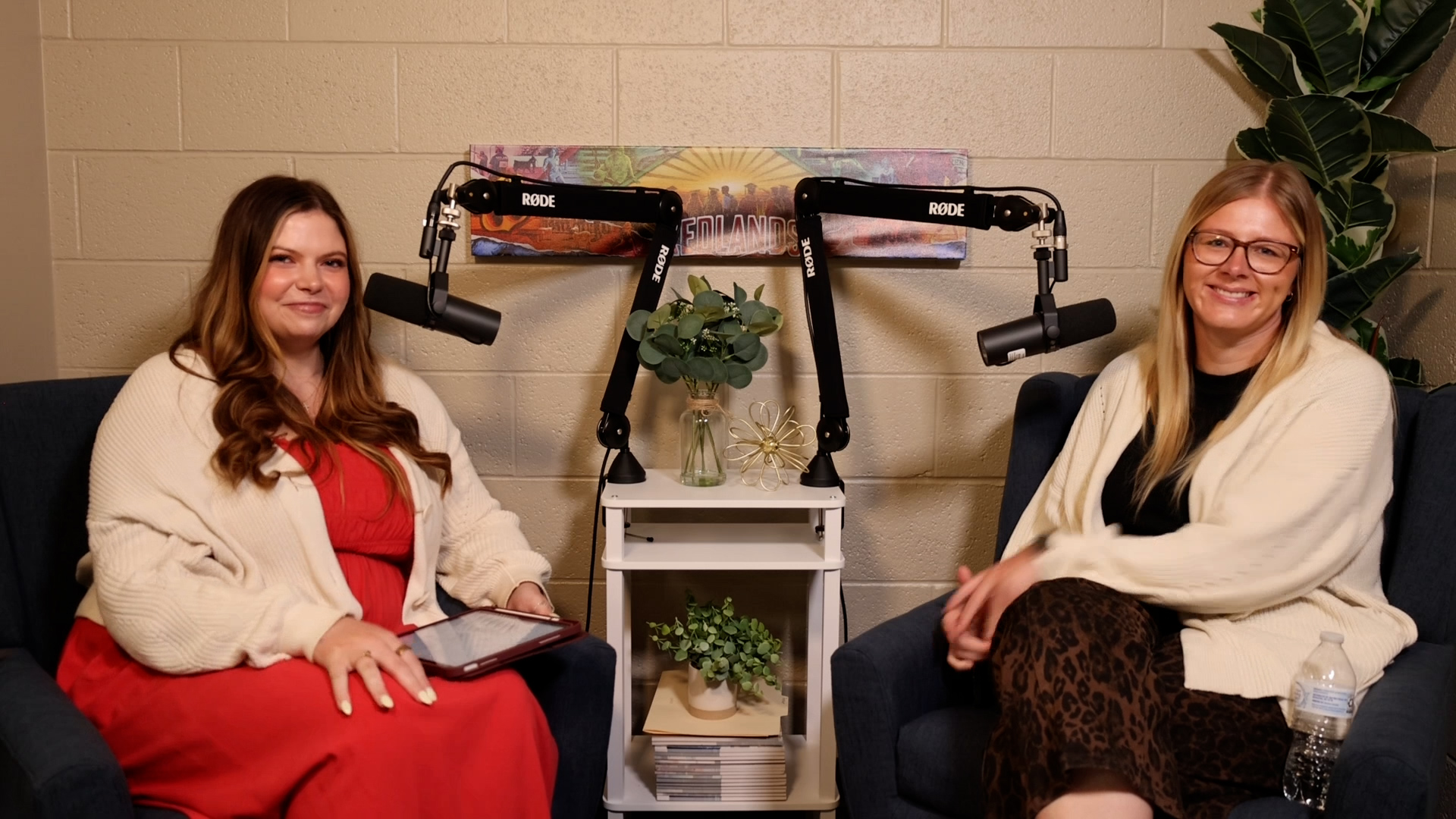
Hi everyone, and welcome back to Redlands Rundown. Today we will be having Tori Davis
here with us, who is our Director of Upward Bound. We're really excited to have her
here to tell us just a little bit about herself, her educational journey and how she
ended up director. So if you could go ahead and tell us just a little bit about you
and your journey to college.
Tori
I actually started college right out of high school. And I really wasn't sure why
I wanted to do it. And so I just knew that that had been what I was told I was supposed
to do after high school. And my mom was really supportive of it, but she had not gone
to college, and it was kind of a running joke for a while that if it could be done
backwards in the hard way, that was the way that I was choosing, but finally figured
it out. So, I went to college, and then I quit a couple of times with withdrawal,
or drop, and then after about ten years, I decided, okay, I can do this. And I buckled
down.
Sydney
Yeah. So you're a first generation student, too. What did that maybe look like for
you without someone to follow in that path that they had stayed?
Tori
So, it was scary. I remember coming in to the college to enroll or talked to advisors,
and I used to tell students that I would work, with who were also first gen, that
you kind of feel like you walk into a room with neon lights around you that are flashing,
saying 'she has no idea what she's doing,' which in fact, you're not supposed to know
because you haven't been there, but it's just kind of that sense of security. So,
really it was just kind of feeling like an imposter and then finally deciding like,
no, you belong. You can do this.
Sydney
Yeah. So, tell us a little bit about why you decided to go back to school as an adult
after all the years.
Tori
So, I was going through some pretty major life changes at the time. And I am a mom
to three kids. They're pretty great. Don't tell 'em I said that though. [Right.] There
egos are pretty big already, but I just knew that I needed to buckle down and get
serious about getting a career to provide for them, and also kind of set the example
for them, like, you can do this too.
Sydney
And so it sounds like you had a lot of other responsibilities you were having to handle
at the same time. What was that like for you balancing school and all of that?
Tori
Well, if you ask my family, they're going to tell you it was full of meltdowns, but
it was really stressful. I was very lucky. I actually ended up working at Redlands
part time when I went back to school, and I had found a really amazing support system
here with my supervisor and just some coworkers that I kind of got to know, and they
were very encouraging through it. And then my, my family had to help a lot with, with
my kids.
Sydney
Right. I think that's something that I feel like a lot of the time, especially probably
as a first generation student, it feels a little bit like I have to figure this out
and I have to do this on my own, and some people do, which is really hard. But it's
so nice when you can find that support system. And I think Redlands does a really
great job of having people and resources like that that you can depend on.
Tori
I agree, and I remember one thing that I felt a lot because I wasn't sure what I wanted
to do. So, I had taken a couple of in-person classes and I was a couple were at night
and things like that. And I remember feeling so guilty about missing out on family
events and my nephew, specifically my nephew's football game. He made it to a championship
game, and I will never, ever get over missing the first half of that. But I got out
of class early that night for some reason, and I got to his game and he looked at
me and he, little baby, he said, this one's for you. And he ran out there and got
a touchdown. And it was just so special because I hadn't been able to go to any of
his games because of my night class. But I just kept telling myself, you're making
short-term sacrifices to get to your long-term goals. And in fact, that's what happened.
Sydney
Right. Was there a moment, maybe, on your journey that you like, step back and felt
so incredibly proud of something that you had accomplished?
Tori
Yes. Eventually. It took a really long time for me to get there because I was so bad
about feeling like, okay, well, I got this goal. What's next, what's next, what's
next? And never being satisfied where I was at and like slowing down to enjoy that:
I finished my associate's degree and now I'm working on my bachelor's degree or, you
know, any of the in-between things. And I remember when I graduated with my bachelor's
degree, I was sitting in this crowd full of people, and I did it online, so I hardly
knew anybody. There was one girl, that we had been, partners on an online project.
So, I kind of was like, okay, well, you're my friend. [Right. We're besties!] And
I remember looking around the room thinking, Holy moly, I did it. And I looked up
in the crowd and I saw my mom and my middle daughter, and they just looked so proud.
And I was like, okay, like, you did this.
Sydney
Yeah. That's so special. I didn't walk in any of my college graduations except for
my master's program and my dad, [Cough] Excuse me, My dad is a first generation student.
And so, I mean, first they were like, oh my gosh, I can't believe you're making us
go to this and sit in this hot gym with all these people, blah, blah, blah. And I
also did my program online, and so I didn't have any friends outside of my professors
because I tend to make best friends with, you know, 60 up. That's like my age range.
And I remember sitting there after I'd walked across the stage and looking back and
seeing my dad and like my professor giving me a hug and just being like, this is the
coolest thing I've ever done. Like, this is the biggest accomplishment I have in my
life. And it's such a surreal feeling. And then getting to hear my dad talk about
it from his standpoint of like, you know, I was the first one of my family to go,
and now I have a kid who has a master's degree like that's so, so surreal to him.
And I just think for you especially to be able to look up and see your daughter, what
a moment for you and for her.
Tori
It really was. And I wasn't going to walk in them. But Amy Graham, who was, she worked
here at Redlands and she was my supervisor at the time, and she was, she just was
very insistent. Yeah. No, you're doing this. Yeah. She was like, even if you're not
doing it for you, do it for your kids. They need to see this happen. And I never regretted
it. I walked in all three of my graduations. And actually, when I graduated from Redlands,
it was special. I graduated during COVID, so there was no graduation. [Right.] But
we got to participate the next year, and my older sister and my brother-in-law finished
their associate's degree that year. And so we all three got to walk together.
Sydney
That's awesome. Well, let's shift a little bit into your career just because I know,
like you said, you were working here while getting all of your degrees, it sounds
like? [Yeah.] Yeah. So, how did you first get started working here at the college?
Tori
Well, it's kind of silly, actually. I just posted on Facebook that I was looking for
a part-time job. I had just my youngest son was almost one, and I had been working
full-time, and it was just like I said, I was going through some life changes and
needed to find something different. And at the time, someone that was working here
just messaged me a job and I got the job. It was for administrative assistant to the
TRIO SSS program, and I started off part-time in there, and then from there it just
kind of grew.
Sydney
Yeah. What do you feel like you learned in that role?
Tori
So much. I had never worked in an education setting. I had never worked directly with
students, but probably one of the, the most used skills that I use today that I learned
in that role was how to manage a budget. [Yeah.] And that has helped me so much in
my positions over time and especially in my director role.
Sydney
Right. And can you tell us maybe a little bit about your roles over time and how they
grew and change throughout?
Tori
So, I started part-time administrative assistant, and then that moved to a full-time
job. And after that I'm trying to remember the order because it all kind of-
Sydney
It blurs together. Yeah.
Tori
It kind of evolved into I think the title was Student Engagement Specialist and Budget
Coordinator. So, I was still doing some of the Administrative Assistant duties, but
I was getting to do more hands on activities with the students, which is where my
passion lies. [Yeah.] And then after I did that for a few years, the director position
opened up on campus for Upward Bound, and I applied for it. I was really nervous.
[Yeah.] It was hard because I did not dislike what I was doing. [Right.] But the I
had just finished my master's degree. This had just opened up. It was just too...
It was just everything I had been working for.
Sydney
Right. Yeah. It's funny that you say that, because I remember when that position opened
up and my first thought was, Tori needs to do that. Like, that is a job that Tori
would be so incredibly good at.
Tori
Gosh. And so many people-And that's what I love about working here, because it really
is just like a little family. [Yeah.] So many people approached me and said, 'I really
think you should consider it.' I know you love what you do, but it was really hard
because I loved working with that program, and that's really where I decided that
education is what I wanted to do. [Yeah.] I just fell in love with it. But Upward
Bound is another very similar program. And so I hit the jackpot.
Sydney
Yeah. Were there times that, like, as you were transitioning, that you probably had
to step outside of your comfort zone or feel a little bit uncomfortable with what
you were doing and learning?
Tori
So much because I was so used to having these ideas for events and things, and I could
run them past my supervisor and she would say, 'oh, I don't know. Or how about we
tweak it this way?' But I was the final decision-maker when I got my new role, and
that was so scary to me because, honestly, I don't always like making decisions. Yeah,
like I'm the friend that if you ask me to go out to eat, I'm going to say yes, but
please don't ask me where I will eat wherever. [It's fine.] Yeah. Even if I don't
like it, I suck it up and do it. So that was probably the biggest comfort zone change
for me. And just learning how-Another thing that was really hard for me was learning
how to delegate jobs, because I'm kind of a doer. [Right.] So something needs to be
done. I'm just going to do it.
Sydney
Yeah. And so, one thing about you is you take care of business.
Tori
Yeah. I don't know if it's good or bad. I end up with a lot of my plate that way.
But something like, as a leader, I had to kind of shift and realize that part of my
job is to teach the people under me, or that I work with how to do things, too.
Sydney
So it that is really hard, especially if that's your personality type, because I think
there's a lot of moments where it's like, it'll just be easier if I do it myself.
Tori
And I'm kind of a perfectionist, right? [Yeah, right.] And so if I have something
envisioned a certain way, then that's the way I want it.
Sydney
And it's like, I don't want to be mad at anyone else, so I'm just going to do it.
Tori
Right. But I'm like that with my kids too. But I will say over time, I have I have
grown and it's a lot easier for me now.
Sydney
Oh, good. You've touched on this, but you're now the director of Upward Bound. Can
you maybe tell just a little bit about that? For those who may not be familiar with
what that is?
Tori
Yes, but if I get long winded, just give me a little tap, because I think it might
be the best program in the world. [Okay.] Upward bound is a college preparatory program
for ninth through 12th graders. It is primarily serving first-gen and income-restricted
students, and it's just all about getting them to college. We spend so much time going
to college campuses in summer school. I'm telling you, you're never going to find
more dedicated students in these Upward Bound students. They want to be here. It's
incredible to experience. We go on some overnight trips and we try to pack a lot of
fun into it, but there's a lot of requirements that they have to meet to do it. Yeah,
but the ultimate goal is we want to see them graduate and we see them go to college.
And it's so, I just I have no other word other than incredible. This year I have 14
seniors and 14 of the 14 of them are going to college.
Sydney
That's so awesome. I got chills, just like thinking about that. And I think for you,
it has to be really cool. Because of the role you came from previously was first generation
students who had made it to college, but now you're getting to work with them on their
way to getting into those programs.
Tori
So there's a lot of similarities. But the biggest shift was these babies are still
high school students, and so they need a little bit more guidance versus when you
get a college student that's here, you can look at them and say, why? [Right.] Why
are you not going to class? But if I said that to one of my high school students,
it would break their heart. [Right. Yeah. Yeah.] So but, it's it's incredible. And
every student that I've come in contact with is, has left some kind of imprint on
my life, whether they realize it or not.
Sydney
What a rewarding thing that you've gotten to do. And just several years of it now
and now in a different way, which is really cool.
Tori
My favorite part of working at Redlands has always been the student engagement and
student connections, and so it really is rewarding to be able to continue to grow
my career in that aspect.
Sydney
Yeah. What skills do you think helped you like prepare for this role of yours now?
Tori
Honestly, my whole experience working in TRIO Student Support Services and Upward
Bound is another TRIO program. And so they are run very similarly. And just from learning
the budget and tracking student data, that sort of stuff, all of that rolled over
and applied to my new job.
Sydney
What does leadership look like in your role? Because I know it's maybe a little bit
different since you are working with high school students.
Tori
Yeah. So there's no two days alike. It's all student-focused, different times of year.
We're focused on different things currently. Right now we're in the recruiting process.
We serve six target schools around the area, and then we're going to roll straight
into summer school. And that's our busy time. [Yeah.] But things day-to-day can fluctuate
from visiting our students at school, coordinating our monthly events or program management
stuff, or just working on budget and allocating and making sure we're on track for
where we need to be.
Sydney
And you have mentioned this, but I know even just talking to you outside of this podcast,
that working with the students is like the most rewarding thing to you. So what would
you say that experience has given to you over the years?
Tori
I might I'm getting a little teary eyed, probably.
Sydney
I love it, I love it. I don't think we've had anyone cry on the podcast, yet.
Tori
I don't know if I want to be the first. It's, it's life changing. Yeah. I can sit
here and my, like, the students that I've come in contact with have made such an impact
on my life, personally and professionally, and helped me know the kind of support
system they need and want to be. It's just, it's incredible.
Sydney
Yeah. How do you-Because I know, again, from talking with you, from talking with other
students, I feel like Miss Tori and Miss Amy were always like THE names. [Yeah.] How
do you build that trust, you know, how do you build that connection?
Tori
I, I don't know. I really don't. I just try to be personable with them. Something
that I work really hard at, especially now I'm serving fewer students in the program,
so it's a lot easier to remember their names. But when I was at Redlands, I would
say or not, I'm still at Redland, right? When I was in TRIO, like as an advisor, I
would try to remember their names. And so when they would come by, I could address
them by their first name. And I would always try to ask them questions about their
personal life. [Yeah.] Even if I couldn't remember their first name, I would remember
that they said they had kids or their grandma had been sick. And I try to do follow
ups about that, but really just being approachable and, and listening to them.
Sydney
Yeah, I think that makes just the biggest difference. And when I think about like
when I was recruiting here and I think about the thing that I felt like really lit
students up was when you would say, like, we will know your name. Like we will know
who you are. You're not just a number to us. You are, you are who you are to us. Like
we are going to remember details. We're going to remember a face. And I think that's
so impactful, especially at such a young age.
Tori
And I think that's the beautiful part of going to a community college. And I don't
think all community colleges are in-tune like Redlands. [Yeah.] I think when you're
walking down the hall and you can say hi so-and-so, and maybe I hadn't had them in
class in a couple of years or I've never had them in class and I just recognized them
from a different event.
Tori
It just makes you feel seen and valued.
Sydney
Now, one time I did say hi to a student by their name, Lexis, and I did actually.
And he was like, how do you know me? And that was enough for me. Like, I'm never gonna
use anyone's name ever again.
Tori
I'm similar things happen to me and I would just come back with something like, just
know things like that.
Sydney
Can you share maybe a moment or a story that really stuck with you from one of your
students?
Tori
You mentioned that you're going to ask me this before this podcast, and I want you
to know, I've spent the last three days trying to find the most impactful, and I have
thought of students that I haven't had in years, but I'm going to share something
that recently happened with one of my Upward Bound students. It was, it was something
that was just very ah-ha moment for me. I had taken a few students to a leadership
conference, and we had just gotten back, and he looked at me and he said, 'hey, Miss
Tori?' And I said, 'yeah?' And he said, 'I just wanted to tell you, Thank you for
making sure I know that I always have a seat at the table.' And I instantly froze
because I thought, 'why would this precious human ever think otherwise?' Because he
is an amazing student and hard work, and he has the work ethic of most people would
never even see. Right. But it just reminded me that while the programs are academic-focused
and we want them to go to college and we want them to be successful, part of it is
helping them know, like, you belong here and you can do it. [Yeah.] And so that student
has no idea that I will think about that conversation, probably for the rest of my
life.
Sydney
Yeah. And what a, what a beautiful thing. But also, I think for you to be able to
take that and know that, that's a quality that you've given someone, you know, that's
something that they have interested in you, is that you always make them feel like
they can sit down and they belong wherever they are.
Tori
Yeah, I want, I want them to think that. And I tell my own kids this too. You can
say whatever you need to say. [Yeah.] You can get it off your chest. But it's how
you say it and how you walk in. And a big part of my job when I worked in Student
Support Services, was helping teach those students how to go talk to your professor.
You can't go in and say, yo, like-
Sydney
I've gotten some good emails, I've gotten some good emails.
Tori
It's, it's going in and being professional and sitting down and saying, I understand
that I missed this assignment. Can you please help me? Is there a way to move forward?
And kind of just teaching them that professionalism in a sense of how to communicate.
Sydney
Right. Do you feel like as you're helping these students in Upward Bound and in TRIO,
that you have maybe seen parts of your journey reflected in them?
Tori
Yes, often I do, but I have to remind myself that it's not my journey, it's theirs.
And I tell students all the time, it's a marathon. It's not a sprint. And had I told
18-year-old Tori that, I probably could have been successful. I just had it in my
head that if I went to school, I had to go full-time, and it just wasn't realistic
for me at the time. And so sometimes slowing down and, and going part time, even if
it's just for a semester, is what you have to do.
Sydney
Yeah. And I think someone outside telling you that makes a really big difference.
And I think especially as someone who, I have a very supportive family, but they say
stuff to me and I'm like, well, you're just saying that. Because you have to and they
don't, first of all, but secondly, I think sometimes when you're able to like step
outside of that and get that outside perspective, it makes you really be like, oh,
okay, it is all right. It is okay for me to do things differently. It is okay for
me to do things the way that I maybe need to in this moment.
Tori
Yeah. And sometimes that's short-term. [Right.] It might just be life circumstances
for that semester or that first eight weeks. And, you know, you can pick up and change
going forward. But sometimes you have to take a step back. [Yeah.] I had many moments
like that during my journey. One of them I'll share with you, it's kind of funny,
and I get a little embarrassed when I think about it now. I took chemistry in-person
as an adult, and it was my first class I had taken in-person in more than ten years,
and I walked in and, and my lab partner called me homegirl. [Sure.] And I looked at
her. I looked at the sheet that the professor had given us and I just left. I was
like, what am I doing? It was about conversions and I didn't know how to use the calculator.
And it was so bad. And I was, I just left and I called my mom and I was like, this
girl just called me homegirl. And it was so bad. And I just it was out of my comfort
zone. I really, chemistry was hard because it was in-person for me and I just felt
so out of place. But honestly, my lab partner was fantastic.
Sydney
Yeah. So you went back?
Tori
I did, I did, and I completed the course and everything. But that first, that day,
I went to chemistry. I mean, they handed out a sheet with some conversions, like,
we should know what we were doing in these fancy calculators. And the kid on the right
of me was knocking it out, and my lab partner was on the left of me and she called
me homegirl. And I thought, you guys know what you're doing. Yeah, this isn't it.
I, I reevaluated every live choice in that moment.
Sydney
I, if it makes you feel better: Never took chemistry because I knew, I knew I would
not pass. I changed majors to avoid taking chemistry in college. B, I think it's so
brave that you walked out because I would have just sat there being lost for God knows
how many hours.
Tori
So, unfortunately, when I get anxious and overwhelmed, I tend to have a physiological
reaction and I get a little rash and stuff. And then everyone wants to ask you: 'what's
wrong?' So I had no choice. [I gotta go. I gotta go.] It was so bad. And my mom was
just like, what?
Sydney
She was like, 'homegirl?' That's so funny. What would you say, being the director
of Upward Bound, is the most rewarding part of your work?
Tori
Just getting to see them overcome their, their hurdles and get to college now. This
is my second year with Upward Bound. And so I am just, last year when my seniors graduated
I had only spent part of the year with them. This year, I'm feeling a little more
emotional and got a little closer and spent more time with them in summer school last
year. But getting to see them just believe in themselves and apply to college. And
I love getting the messages of: Miss Tori, I got in. Miss Tori, I got this scholarship
and it just makes me so proud for them.
Sydney
What does success look like for your students?
Tori
I would say ultimate success is them, you know, finishing high school and applying
to college.
Sydney
And then for you personally, like either within your role or outside of it, what does
that look like for you when it comes to success?
Tori
So, it's funny you're asking me this question because it's one of our questions when
we interview our new Upward Bound participants. And I always tell them, I'm like,
don't overthink it. Like, what do you think? But truly, success for me, is just being
proud of where you're at. And it I'm never and not everybody's like this. I'm never
going to stop trying to achieve the next goal in my life. But I have worked really
hard to slow down and enjoy where I'm at, and know that success isn't always money
and fancy cars and things like that. But for me, success was completing my master's
degree. That was the goal that I set out to do for myself.
Sydney
That's awesome. For students who maybe are first generation or even just unsure about
their path. What piece of advice would you give?
Tori
Ask the questions. [Yeah.] You're not supposed to know it. [Right.] And that that
is the biggest barrier for, I would say, majority of students that I've ever helped
or like, gotten to know, is there too afraid to ask. And they're scared to ask because
they don't want to seem like they shouldn't be here or they should know it. And I
just tell them, like, you've never been to college. You're not supposed to know it,
and I know it because I work here.
Sydney
Yeah. And something that helped me. I never did it because the last thing I was ever
going to do was raise my hand in the class, but I it was like I would not, I never
did, but I remember someone telling us once, you know, if you're wondering a question,
someone else probably is too. And that was true because a lot of people ask questions
that I also was wondering that I was never going to raise my hand and ask. But I was
always so thankful when someone did, and I was always so thankful that they were brave
enough, because to me, that was a huge leap of like, oh, okay, they don't care because
they just need to know the answer. And that's how we should all be like, I just need
to know the answer.
Tori
I was so scared. Like as a student coming back to school, I was taking speech and
it was a night class. [Yeah.] And we gave our speeches and my, my professor, he ended
up accidentally giving me a zero on a speech that I knew that I gave. [Right.] And
I was just like, maybe he thought I did terrible and I never said anything. And then
the last week of class, when grades were due, I got a call from a number I didn't
know, and I answered it and it was my instructor for that class, and he said, 'Hey
Tori, I'm getting ready to submit final grades. And I noticed your grade isn't what
I thought it would be. And you had a zero on a speech, but I feel like I remember
you giving that.' And I was like, 'Oh, I did. I just thought I did bad,' and so I
should have not been afraid in that moment to say, 'Hey, can I see the rubric for
that?' [Right.] Because they don't just often give you a zero with no feedback.
Sydney
Especially if you gave the speech.
Tori
But had I been at a bigger college, that instructor wasn't going to take the time
to call me, most likely. I don't want to say of everybody, but that was definitely
a perk of being at a community college that's so close knit like this.
Sydney
Yeah. What would you say to students who maybe feel like it's too late to start over,
or to even just start their journey?
Tori
Oh, it's never too late. [Yeah.] So I changed my degree path so many times, and we're
here and I did it, and I love it. But it's just that taking that first initial step
and it's scary as an adult. [Yeah.] I think it was scarier as an adult to come back
than it was fresh out of high school because you think people are looking at you.
Like, why is she here? She's old and I'm not old by the way.
Sydney
No you're not. You're still young. You're a fresh chicken.
Tori
But I felt like that. Especially when, you know, I went to chemistry and.
Sydney
Right. They were, they called you homegirl and you were like, oh my God, I'm ancient.
What happened?
Tori
I just want you to know that happened so long ago and I still have nightmares about
it.
Sydney
So funny. Is there anything that you maybe wish you would have known earlier on in
your journey? Either career, educational, anything like that?
Tori
I wish that I would have believed in myself a little bit more. [Yeah.] And I think
I did a great job at that in my master's program. I had built that confidence, and
I've had a ton of mentors. And, you know, actually, since I went, I graduated from
Redlands and there was instructors that I've had that turned coworkers and turned
friends, and I couldn't have gotten to where I am without all of that support. I do
wish that I would have allowed myself to be vulnerable and get that support before,
instead of feeling like I [Right] had to do it on my own, I guess. And then I just
wish 18-year-old Tori could see me now.
Sydney
Yeah, I kind of want to close out this, actually, with something that you told me
when I was trying to decide if I wanted to do my master's, because I was at the point
that I was like, I don't know, I haven't gone to school for, you know, two years and
that which now I'm like, that's nothing. But at the time it felt like that's a really
big step to take and go back into and to start paying for it and to do all these things.
And I don't know if you remember this, but I was in your office, your old TRIO office
in Ray Porter.
Tori
I'm sorry I'm so opinionated. I'm always giving people unsolicited advice.
Sydney
It changed my life. And you looked at me and you said: 'Knowledge is the one thing
no one can take from you.' And as silly as it is, like, I had never heard that before,
and I had never thought of that before. And since then, it is something that I tell
my students. It's something that I tell anyone that I come across whenever they're
wondering things like, is it too late? Should I do this? Like I just always say, you
know, I have a friend that told me once, no one can ever take that from you. [Oh!]
And so it's something I keep close to me all the time. And I'm just thankful that
I got to have that with you.
Tori
I love you. I love that for you. And I really do tell people that all the time. Because
you never know. Your house get burned down. You your car can get wrecked into all
of it. But at the end of the day, you earn that degree and nobody can take that from
you. And I have never had a student come back to me and say, 'oh, I regretted graduating.'
[Right.] Yeah. [That's the worst thing I ever did.] Yeah. No, I think sometimes we
have to take a step back and realize what our why is. [Yeah.] And that is why I was
not successful in my first attempts in college, because I wasn't doing it for the
right reasons. I was doing it because I thought that's what I was supposed to do.
[Right.] But once you can figure that out, you're never going to regret it. [Yeah.]
might make some long nights, [Right. But you won't regret it in the end.] Yeah. Well,
I'm glad to know that you remember that conversation. And you don't think, 'Ah, Tori's
crazy just talking at me.'
Sydney
Yeah. I was like, oh, this is the worst. I think about it a lot. I really do. Well,
thank you for sharing your journey with us and your story and just the impact that
it's had on you, but also the impact you've made on campus.
Tori
Thank you for having me. I was really nervous about it because I tend to ramble when
I get passionate about things, but this was special and I appreciate it.
Sydney
Well, thank you guys for listening and make sure to tune back in whatever you get
your podcast. So listen to the next episode of Redlands Rundown. Bye guys.