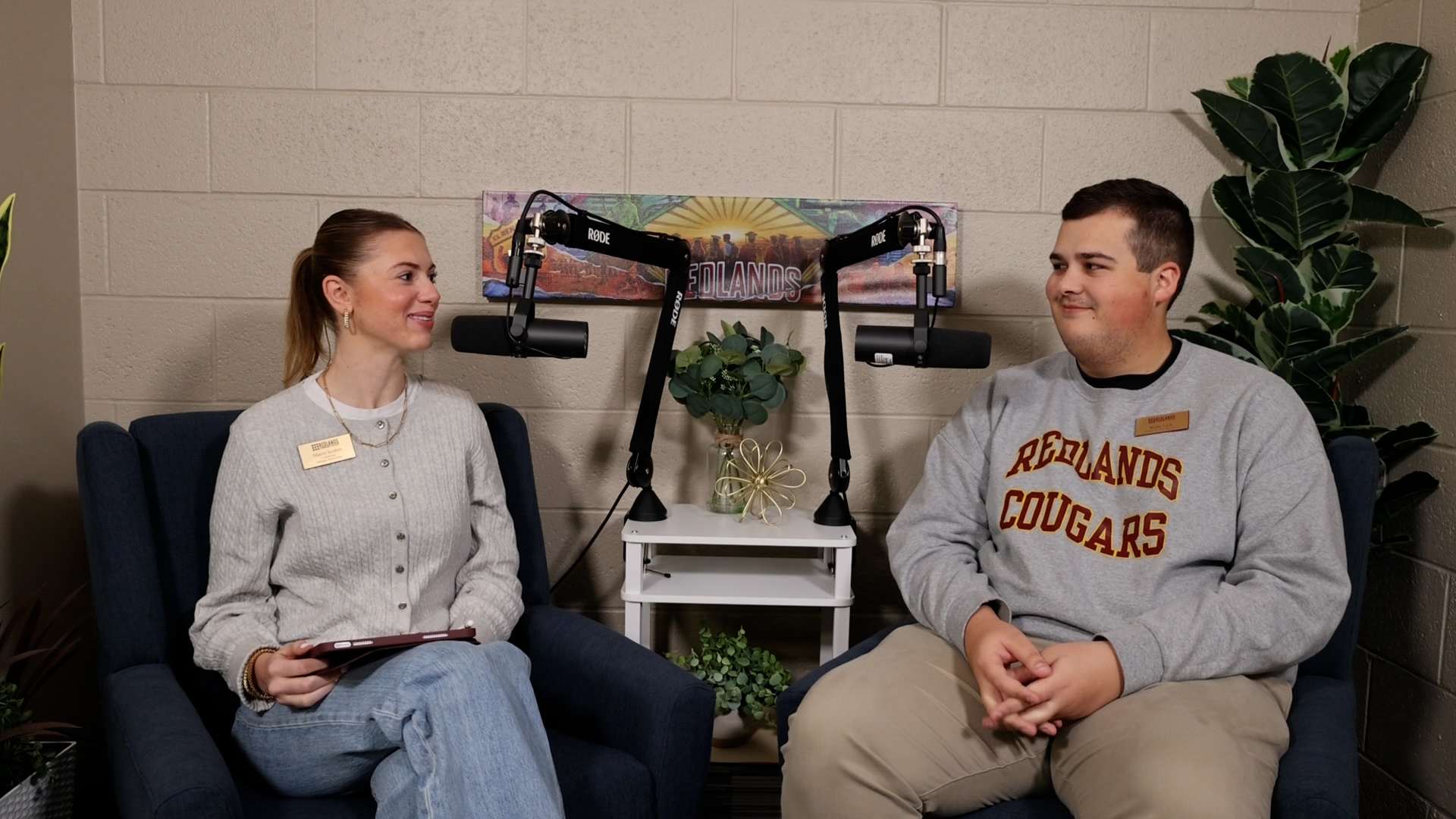
Watch this episode
Transcript
Macey
Hey everyone, welcome back to The Redlands Rundown, the official podcast of Redlands
Community College, where we're committed to helping our students find success in the
classroom, in their careers and with everything in between. Today, back by popular
demand, we have Mr. Brady Leck, an advisor in our admissions office, and I'm really
excited about this episode. And I think it's timed perfectly because Fall enrollment
is getting ready to open in just a few days. And so Brady's going to join us to talk
to us a little bit about how we can prepare for that, some things that we need to
know. So, Brady, I'll let you introduce yourself real quickly for those that missed
you when you were on last.
Brady
Yeah. So my name is Brady, I'm one of the advisors in the admissions office. I do
regular enrollment for students who are here after high school, and I also do concurrent
enrollment, which I know we'll touch on also. So making sure students are enrolled
in the right classes, making sure they're on track to graduate, and send them outside
if they want, if they want to transfer to school or stuff like that.
Macey
Awesome. Yeah. And you're also a Redlands alum. [I am.] And so you bring that kind
of experience to where you can relate to students about, you know, your time and classes
and with the professors and everything. And I think that's really valuable from an
advising standpoint. Awesome. Okay. So like I mentioned, Fall enrollment is getting
ready to open. So your office is getting ready to be swarmed.
Macey
But, excuse me [cough], why is it so important for students to start preparing now
instead of waiting until the middle or end of the summer?
Brady
Well, I really think it's important, like if you are a first time student, like it's
so important to get into the classes you want, especially with such a big change coming.
So you could plan out if you want to work. You know, if you work Tuesdays and Thursdays,
you playing classes around that and you know, if you're returning, making sure that
you're in the classes that you need to graduate before they're full. So each, even
if you're in a different spot, different work scenario, it's really important for
you to do it early and make sure all your classes are in on time.
Macey
Yeah. And you bring up a good point about our classing schedule. Sometimes high school
students that are coming in don't understand like the schedule that we run on. So
can you explain that just a little bit more how classes need-?
Brady
Yeah. So we have classes on Mondays and Wednesdays and then Tuesdays and Thursdays,
and we'll have a couple hybrid classes that meet once a week, but they're typically
an hour and 15 minutes. And then if you do it early enough, you can plan those where
they're one after another. So if you end up working Tuesdays and Thursdays, you can
plan your classes Monday and Wednesdays, Wednesdays or online.
Macey
Yeah. So it's nice. We have a little bit more flexibility on scheduling. And we have
a lot of students that either have, are on competitive teams or have jobs and are
scheduling around what they have going on in their lives. And no classes on Fridays,
which is awesome. [Absolutely.] So okay, so you kind of hinted to this a little bit,
what happens if a student waits too long to enroll?
Brady
So if they wait too long, they may not get to the classes that they need to graduate.
Unfortunately, I've run into that a couple of times where students wait till the last
minute and they don't have the email. And they only need two classes and both of them
are full, so if they get in early, make sure that there's room in the classes, make
sure there's no issues getting into them, and no issues graduating, making sure classes
on the right, and stuff like that.
Macey
Yeah. So early bird gets the worm.
Brady
Absolutely.
Macey
Okay. Awesome. So one of the options that students have to prepare for their upcoming
semesters is to meet with their advisors, right? So can you explain how to schedule
an appointment and how an advisory appointment is really helpful for students?
Brady
Yeah. So they can go on our website. I believe it's under the admissions tab. You
can schedule an appointment with your advisor either virtual or in person. You can
also do the application part if you are curious about what you need or how to do it,
or advising. So we have students that will book appointments, whether they've been
accepted or not, or students that have been here for a year and a half and need help
picking classes. And it's really important to get a feel for what you have left, maybe
what you have, need at all, or even first-time students who just need help, understand
what's about to happen and bring it down for them so that, that way they have a better
understanding of what's ahead, what they need to do and things like that.
Macey
Awesome. Another question that I have: Do you guys pick all the classes for the students
or do they have some responsibility picking their own classes?
Brady
It's kind of a mix, so they'll have a responsibility and picking their own. But we
will also tell them, you know, it'd be better if you took this class before because
it's a prerequisite for another class and maybe knocking out English and math first.
That's one thing that we'll recommend. So things like that, but it will also be on
them to make sure, I want to take the right classes if they're not coming to meeting
with us. But then again, if they're coming to meet with us, then we'll tell them that.
one, um, whether it's virtual or in person.
Macey
Yeah. And if you're not in person with an advisor and you're wondering what the typical
like plan of study looks like, those are available on our website to aren't they underneath
the different degrees?
Brady
If you can find it, we can always find it too.
Macey
Yeah. Awesome. So who would you recommend makes an advising appointment right now?
Brady
I would definitely say first-time freshmen, if they're planning on coming here after
they graduate high school. I think we are going to try and make it mandatory for most
of them to come see us. We obviously know that not everyone can make it, but we really
like them to come out so we can explain their whole degree path. Explain why you should
walk down this route. You know, what are you wanting to do for career, things like
that. But even we have students who only have few classes to graduate and they want
to come because, want to make sure they're set to graduate. [Yeah.] So, even all students
can do it. But even first-time freshmen I would say are the biggest ones that should
come.
Macey
Awesome. Okay, so you've talked about these two different groups a couple of times,
and I want to talk about them a little bit more. So we've got incoming freshmen versus
our returning students. They're both in a little bit of different places but both
need to be getting ready also especially with Fall enrollment opening up. So we've
talked a little bit about our incoming freshmen. What other top things do those new
students need to be doing? We haven't really talked in depth a lot about the application
process. Will you go over that.
Brady
Yeah. So you can apply online. We'll need your high school transcript. And then we'll
also need a college transcript if you took any concurrent classes. If you apply now
you'll get in before enrollment starts that way, when it does start, we can get you
all the classes that you prefer. And it's just overall better to apply now than to
wait till the last minute. Because as we get to the last minute, you know, 1st part
of August, 1st part of July, we're getting busy at our office and things will take
longer, unfortunately. So that's why I would recommend students start applying now
if you know you're coming here and getting that done and making sure all your ducks
in a row before you get here.
Macey
Yeah, for sure. And another thing is our offices are closed on Fridays in the summers.
So one less day that you can come in and meet with us. I want you also to touch on
orientation. I don't know that the signup is available yet, but can you talk about
what that looks like?
Brady
Yeah. So I think it's typically the Saturday before the first day of school. Parents
are welcome. And we'll do a big presentation welcoming them, telling them a little
bit about the campus. We'll take a nice group photo. Then we'll do presentations telling
them about the campus. You will get your ID, your parking pass, get you all set up
for the semester before it starts. That way, when first day of school happens, you're
just worrying about your classes. You don't have to worry about all the extra stuff
that you may have to do.
Macey
Yeah, I love Orientation Day. You know, the vibes are always really high and everyone's
really excited to be back on campus. And it's a good time for our students to get
to meet and mingle with each other a little bit. And there's a lot of a lot of valuable
information that we go over. And then typically after orientation, a few of them,
key offices, are open, right? Admissions will be open, I think financial aid, maybe
the registrar's. So, a couple, a couple offices, if you've got some final things you
need to do right before classes start, then you can go visit with our different offices.
One thing I also want to touch on, and I know that we're past the official deadline
for scholarship applications, but if we have any students that are new, incoming,
or even returning, students still haven't applied-our tuition waivers-those are still
open and those stay open year round. So if you are looking for some scholarship opportunities,
you can apply for either of those and then: financial aid. If you ever have questions
about FAFSA or any other kind of federal aid, I would encourage you to stop by and
talk with Paris or McKinsey and our financial aid office. They're super, super helpful.
And that's both for incoming freshmen and returning students. All those resources
are. So I just wanted to mention that really quickly. So now I want to transition
to the returning students and focus on them just a little bit more. What are some
things that they need to be thinking about right now?
Brady
So with the returning students, they really need to be making sure that, again, they're
getting into the correct classes they need, but also doing it early enough that they
can get the classes in terms of time of day, certain days, like you mentioned earlier,
if they're on a sports team or, you know, a club, they need to make sure they're on
certain days and they make sure to attract a graduate because you only have two semesters
left. So making sure that you're coming, speaking with us about: what order do I pick
my classes, you know, do I need to take this one first, this one last? How does that
work? So they really need to be focusing on what classes come first and getting that
over fast. And they can always come and talk to us even now, without enrollment being
open. So that's one big thing that I would push for returning students.
Macey
Okay. Awesome. Another thing that I kind of put on here to make a note of was checking
for holds. Sometimes that something that gets in the way of our students enrolling,
and that can make that kind of a lengthy thing. So can you talk about a few different
holds that some students have? Sometimes.
Brady
So sometimes we'll have business holds. If students owe over a certain amount, there'll
be a hold placed on there and you'll go talk to the business office about that. We'll
even have transcript holds. So sometimes we'll have transfer students who don't have
a complete transcript or even high school students who came here out of high school
that applied before they graduated and their transcripts, aren't complete.
Brady
So a couple of those we put on just to stop them from enrolling. But all they have
to do is go to the corresponding office and on their hold, on their account of tell
them who to contact. And they just need to go contact the office and say, what do
I need to do to get this fixed? And then they'll tell them from there, that way that
hold can be taken off.
Macey
Yeah, I think that can be a little bit alarming when a student sees a hold sometimes,
but it's really not, not supposed to be a barrier or anything. It's really just for
our housekeeping. So that way we can keep everything in line. For example, like on
the transcript thing, we don't want you guys to be getting ready to walk, and we're
like, hey, we're missing this transcript. So just let us know if you have questions
about anything like that because we can help put you in the right direction. Okay.
Final thing, correct me if I'm wrong, but a new change this last year was our students
have just a little more autonomy in control over enrolling themselves. Can they enroll
themselves without seeing an advisor at all?
Brady
They don't have to physically come see an advisor. They can enroll themselves by picking
their classes, and then they'll hit Request Review, and it sends us an email saying:
This student has requested approval for their classes. And then from there we'll go
through and making sure that they pick classes that we would recommend, or if they
need to go in a certain order, like I touched on earlier, making sure that all aligns,
but they cannot enroll themselves in classes without our approval. So we'll make sure
that all their classes align, go towards their graduation, things like that.
Macey
Awesome. And there are some resources on the website to help them see where they can
pick courses that actually go towards a degree and things like that, right? [Yes.]
Awesome. And if you need help finding those links to those resources, you can reach
out to us, reach out to Brady, anyone in the admissions they'll help you find those
things. Awesome. Okay, so I want to talk about another group of students that we haven't
touched on yet. And I hope that we have some listening, but our concurrent students.
So, can you talk just a little bit about what concurrent enrollment is and explain
that for someone who might not be familiar with that term?
Brady
Yeah. So concurrent students are high school students who are qualified by the state
to take college classes, they get tuition paid for by the state, they have to pay
fees. So it's really good if you want to get a head start on college and not pay as
much than they would after they graduate. I think typically our classes cost around
the $500 range outside of high school with the state paying tuition, so it's only
97 per class. So it's a really good opportunity for students to get ahead of the game
before they end up coming to us.
Macey
Yeah for sure. That's awesome. And one thing that I wanted to mention, that we didn't
mention all our incoming students is we are open admissions, so we take everyone.
But for concurrent students, that's a little bit different, right? What does the admissions
requirements look like for a concurrent student?
Brady
So the state requires that they have a 3.0 unweighted GPA or a 19 composite ACT, or
the equivalent of the SAT, I don't know that off the top of my head. But either one
of those two will qualify them for concurrent, and then they have to qualify for each
class separately. So, if they want to take an English class, we'll look at their English
grades. Math, will look at math, and go from there, seeing what classes they want
and what they qualify for.
Macey
Awesome. And traditionally it's juniors and seniors, right?
Brady
Yes.
Macey
Have any sophomores?
Brady
We do, but they have to be approved by the state. So, they will apply. The counselor
will send us approval. We send it to the state regents, and then they will come back
to us and say they are approved, take classes or they are not able to.
Macey
Okay. Awesome. That's all really good to know. So, how can students and parents get
started with this, that are interested in enrolling a concurrent classes?
Brady
So one big thing I would, I think we do differently, is we have one advisor that works
with a specific school and does everything for the for that school. So, someone applies
for a certain school that I have, I do all of it. So I work the application, I enroll
them, I contact their counselor, all of that. So they can always call us and say,
you know: my student goes to this school, who would be the contact that and we'll
walk them through it. They can always apply and then call us if they have any questions
or just email us. But the application will say what high school they're from and get
assigned to their advisor. And we'll tell them that on there.
Macey
Awesome. And then one question that I've gotten a few times when I've been out recruiting
is if a student takes concurrent classes somewhere else and they decide to come here
as an incoming freshman or vice versa, they take concurrent classes with us at Redlands
while in high school, but decide to go somewhere else, do those transfer easily?
Brady
Yeah, typically, as long as they're in state, I don't find an issue with them transferring
at all unless it's like a science class, because some of those colleges will have
different curriculums on what the science classes will look like. But most of your
English, history, government, those classes that most concurrent students take transfer
pretty frequently and easily.
Macey
And you brought up a good point. What kind of classes should concurrent students be
taking? I know sometimes they're really eager. You know, they're excited about a field
that they're interested in. But what kind of classes do you recommend they take?
Brady
So typically I tell them: start off with history and government. Now, it always depends
on the high school, because I have some that will not let students take English their
junior year. I have some that are okay with that or them taking a higher level class
for Junior year. So it depends on the high school too. But most of the time I tell
them government, history, English, psychology, things like that. Those are good starter
classes to get a feel for how you do it in concurrent classes.
Macey
Okay. Awesome. Yeah, and from my experience, because I work with a lot of out-of-state
students that come in on our livestock judging team and our Ag program, and we've
had a lot of students that have taken concurrent classes at other colleges and institutions
and a lot of different states. And I usually not had a problem with, you know, those
classes transferring in either. Like you said, sometimes the sciences, just because
the rigor can be a little bit different. But yeah. So it's great to, to get a head
start if you, if you want to do that. So awesome. Okay. So I have got a couple of
fun myth versus reality questions that I want to run by you. So the first myth I have
that I want you to respond to is a student that might say: I still have all Summer
to figure out my Fall classes.
Brady
I don't really think that would be the case. You know, most of the time, like I said
earlier, if you come early, you get it done. And then when classes start in August,
you're set to go, I really don't recommend waiting until Summer, but we obviously
understand if things happen over the summer. You need a change, like if someone's
transferring in, things like that, it's going to happen. But if you are here and returning,
you know, I would come do it as soon as enrollment opens.
Macey
Yeah, yeah. We're happy to work with new students and enroll you, as you know, up
until that first week of classes. But the earlier, the better. And like you said,
on different sections and times and there are some students that prefer certain professors.
And so, you know, if you have those preferences, the earlier you can enroll the better.
Because one thing we haven't touched a ton about is, you know, our in-person versus
online, we probably have more online sections of classes than in-person. So the in-persons
can fill up a little bit quicker. What's average class size look like for, for an
in-person class?
Brady
I would say something like English or history, like the more common classes that most
students are going to have to take, I would say 20 to 25. You know, I don't typically
see them getting full unless they're a science class, which, you know, some majors
have to have so, those will fill up fast. But most of your English, history, government,
speech, I guess, will fill up too. But those will have typically 20, 25 at the most
somewhere around there.
Macey
Awesome. Okay. So my next myth is: Advising is only for students who are struggling
or are brand new.
Brady
I don't really think that's the case either. You know, whatever-It definitely helps
if we have brand new students who will come and get, you know, have an appointment
with us. But even returning students, I have some that are like, you know, I want
to make sure when you graduate or am I taking the classes in the right order? You
know, I think advising is for everyone, you know? Certain students can pick it up
once they end that first talk through and can do it on their own. But we meet with
all sorts of students, not just brand new students, for sure.
Macey
Awesome. Okay, so my last myth is: College emails are really not that important.
Brady
I don't think that's true either. I wish more students check their emails sometimes.
There's always good info about, you know, your professor may email you. And I've had
students who are like, I didn't see it. You know, events we're doing that campus,
scholarships. I mean, all sorts of stuff is in there. So I really think students should
check their email more often because there is more important info than what they typically
think.
Macey
Yeah. And, and on the incoming freshmen right now, are you guys emailing personal
emails that are on file or their college email, or are those active yet?
Brady
Typically we're just doing a personal because once they get accepted, their Redlands
email will populate in a couple of days, but typically we'll communicate through them,
with them through their personal email as of right now.
Macey
Okay. Awesome. So maybe check both.
Brady
Yeah I would check both.
Macey
Awesome. Okay, so I want to ask you for some final advice before we wrap up our episode.
If you could give students one piece of advice right now as enrollment opens, what
would it be?
Brady
I think it's kind of the purpose of this whole episode is do it early. I think it
will set you up better down the road. You get to pick the class you want, at times,
you get to make your own schedule in a sense where you come early and have all the
classes open. You could pick from, you know, online versus in-person, certain days
of the week, things like that.
Brady
That's what I would recommend to just come talk to us early, you know, get it over
with before the Summer, too, if you go home. And it's just a little bit easier on
everyone involved, especially the student.
Macey
Awesome. Yeah, it's great to, to have that done and set up before you leave for the
semester and enjoy your Summer and then come back refreshed so you're not worrying
about it. Awesome. Well, thank you so much for joining us today, Brady, and for everything
that you do for our students. I know we all really appreciate your office because
we know it's busy and hectic and you guys have a big workload, but appreciate what
you do. So for everyone listening, this is your sign to start preparing now and your
future self will be really thankful that you did. So, if you have any questions and
need help with your application, getting enrolled, you have questions, you can reach
out to admissions. What's some good, what's your guys's email contact?
Brady
I believe it's admissions@RedlandsCC.edu.
Macey
Awesome. And if you want to call them you can look us up on our website and then those
links to make your advising appointment are also on our website so you can find all
those resources there. And we'll see you next time on the Redlands Rundown. See you.